

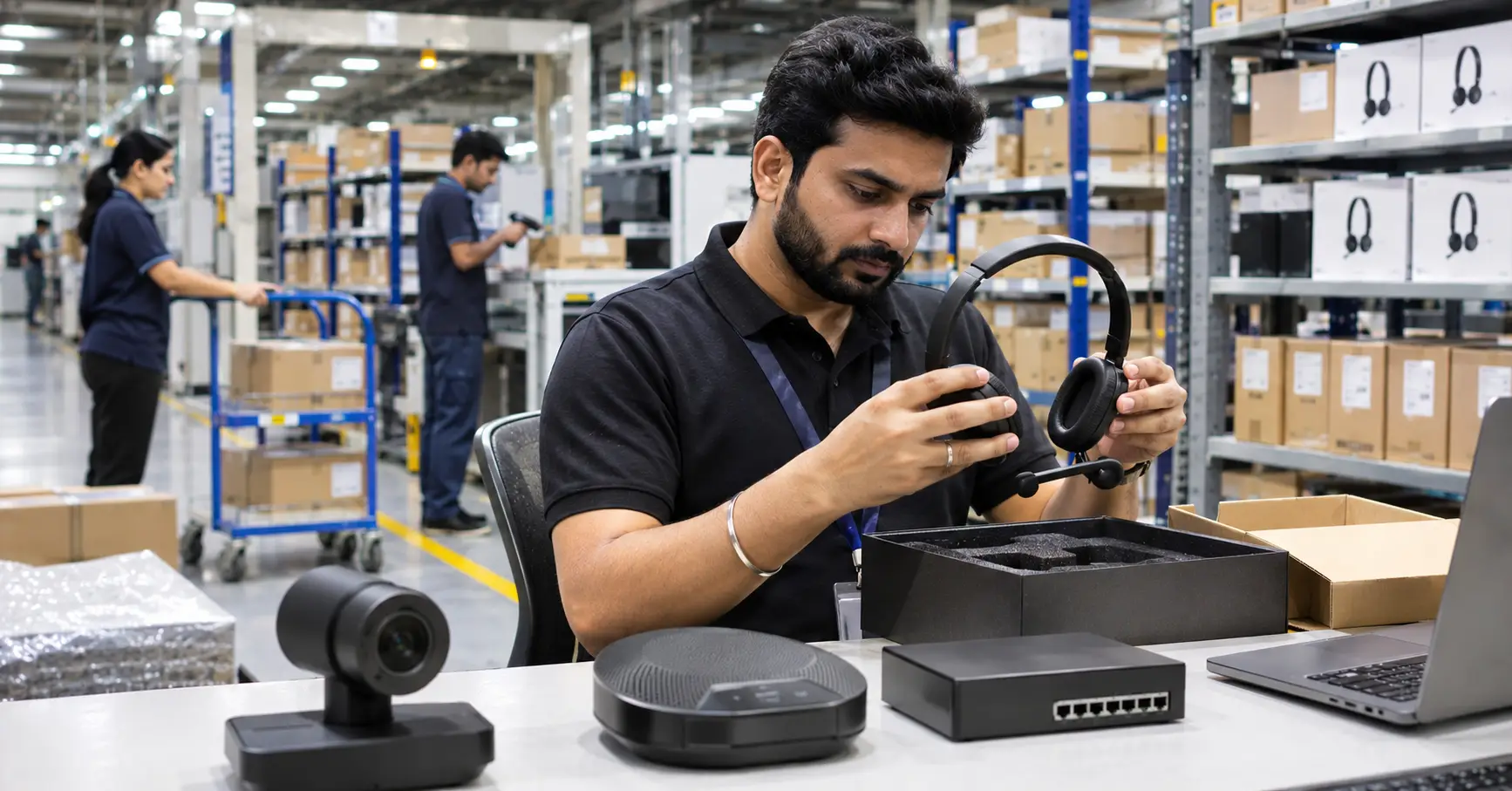
Enterprise communication has changed significantly as businesses adopt hybrid work, distributed teams, contact centres and increasingly digital collaboration environments. Headsets, speakerphones, desk phones and video collaboration devices have become important workplace technology rather than simple accessories.
For brands supplying these products in India, reaching enterprise customers requires more than importing products and appointing individual resellers. A capable national distributor can help connect the brand with channel partners, enterprise buyers, system integrators and regional markets while supporting inventory, logistics and after-sales requirements.
This makes the choice of an enterprise headset and unified communications distributor in India an important commercial decision.
What Does an Enterprise Headset and UC Distributor Do?
A distributor sits between the technology brand and the market. Its role can include importing or sourcing products, maintaining inventory, managing channel relationships, supporting sales, coordinating logistics and helping partners take products to customers.
In the unified communications market, the portfolio can extend beyond headsets to include speakerphones, desk phones, video conferencing equipment and other collaboration endpoints.
Modern enterprise collaboration devices also need to work with the software platforms businesses already use. HP Poly, for example, offers collaboration endpoints designed for environments including Microsoft Teams, Zoom and Google Workspace. Platform compatibility and certification can therefore become important considerations when products are being specified for enterprise deployments.
Why National Distribution Matters for Enterprise Technology
Enterprise technology sales are rarely limited to one city or one type of customer. A brand may need to serve large organisations with offices across multiple regions, contact centres, IT resellers, system integrators and specialised business-technology partners.
A national distribution network can help create a more consistent route to market by coordinating inventory and channel availability across locations.
For a technology brand, this can support:
- Broader geographic market coverage
- Faster product availability through channel partners
- More consistent inventory planning
- Centralised distributor coordination
- Scalable enterprise and channel sales
- Better support for product launches and portfolio expansion
The value of national distribution therefore lies not simply in the number of locations covered, but in how effectively the distributor connects those markets.
Key Factors to Consider When Choosing a National Distributor
1. Pan-India Channel Reach
A distributor should be able to demonstrate how its channel network reaches the markets relevant to the brand. This may include regional distributors, resellers, enterprise technology partners, system integrators and organised retail or e-commerce channels where appropriate.
Geographic coverage should also be supported by an operating structure capable of maintaining product availability and coordinating channel requirements across regions.
2. Experience in Enterprise Technology
Enterprise headsets and unified communications products are different from conventional consumer electronics. Buyers may require product demonstrations, deployment guidance, platform compatibility, technical support and structured procurement.
A distributor with relevant enterprise technology experience is therefore better positioned to understand the sales cycle, partner ecosystem and support expectations surrounding these products.
3. Portfolio and Platform Compatibility
A strong distributor should understand the wider collaboration ecosystem rather than treating the headset as an isolated product.
Depending on the brand and target market, the portfolio may include:
- USB and Bluetooth headsets
- DECT headsets
- Contact-centre headsets
- Speakerphones
- Desk phones
- Video conferencing devices
- Collaboration room solutions
Compatibility with platforms such as Microsoft Teams, Zoom and other unified communications environments can also influence product selection and enterprise adoption.
4. Inventory and Supply-Chain Capability
Enterprise customers often require multiple units or standardised device fleets rather than individual purchases. A distributor must therefore be able to forecast demand, maintain appropriate inventory and coordinate replenishment.
Good inventory management can reduce stock-outs during customer deployments while avoiding excessive channel inventory that ties up working capital.
5. Logistics and Delivery Infrastructure
National distribution requires more than a warehouse. The distributor needs processes for order management, regional fulfilment, transportation, documentation and delivery coordination.
This becomes particularly important when a customer is deploying communication devices across multiple offices or when channel partners require predictable replenishment.
6. Channel Development and Go-to-Market Support
A distributor should contribute to market development rather than simply moving boxes.
Useful capabilities can include partner onboarding, product training, sales enablement, demonstrations, marketing support and demand-generation programmes.
These activities help channel partners understand where a product fits, which customer segments to target and how to communicate its value.
7. Technical and After-Sales Support
Enterprise communication products become part of an organisation's daily workflow. Problems involving compatibility, configuration, firmware or deployment can affect productivity.
Brands should therefore understand what level of technical and after-sales support a distributor can provide and where responsibility sits between the distributor, reseller, manufacturer and end customer.
What Should Brands Ask Before Appointing a Distributor?
Before selecting a national distributor, brands should ask practical questions such as:
- What geographic and channel coverage can the distributor provide?
- Which enterprise technology categories does it already handle?
- What experience does it have with headsets and unified communications?
- How does it forecast and manage inventory?
- What logistics and fulfilment infrastructure is available?
- How does it support channel partners?
- What technical and after-sales support is available?
- How will sales performance and channel expansion be measured?
- Can the distributor scale with the brand as volumes increase?
The answers can reveal whether a distributor is simply a logistics provider or a genuine route-to-market partner.
Why Enterprise Headset Distribution Requires a Different Approach
Enterprise headsets can serve very different users. Contact-centre agents may prioritise long-duration comfort, microphone performance and durability. Hybrid workers may need wireless connectivity, noise cancellation and compatibility across multiple devices. Meeting rooms may require speakerphones, video systems and integrated collaboration solutions.
This variety makes segmentation important.
A national distributor needs enough product and market understanding to help channel partners match the right solution to the customer's working environment rather than treating every headset as an interchangeable accessory.
Optiemus' Enterprise Headset Distribution Experience
Optiemus Infracom has more than three decades of experience in India's telecommunications and technology distribution ecosystem. Its current distribution portfolio includes Poly, a HP company, and Optiemus describes itself as a national distribution partner for Poly's headset systems.
Optiemus also highlights its long-standing relationship with Poly and its wider experience in building Pan-India distribution networks for major technology brands. This provides a relevant foundation for brands evaluating national distribution for enterprise communication products.
Explore Optiemus' technology and telecom distribution capabilities.
Building a Scalable Route to Market
For an enterprise headset or unified communications brand, appointing a national distributor should be viewed as a strategic route-to-market decision.
The right partner should combine geographic reach with channel relationships, inventory planning, logistics, market development and customer support. It should also understand the technology ecosystem in which enterprise communication products are deployed.
As businesses continue to support hybrid teams, contact centres and distributed workplaces, the demand for reliable collaboration technology will continue to create opportunities for enterprise communication brands in India.
Conclusion
Choosing an enterprise headset and unified communications distributor in India requires more than comparing sales reach or distribution margins. Brands should evaluate channel depth, enterprise technology experience, inventory management, logistics, platform knowledge, partner enablement and after-sales support.
A distributor that can combine these capabilities can help a technology brand build a more consistent and scalable presence across India's enterprise market.
With its long-standing distribution experience and current national partnership for Poly, Optiemus Infracom provides an established route-to-market platform for enterprise communication and technology products in India.
Learn more about Optiemus' distribution capabilities.
Frequently Asked Questions
What does an enterprise headset distributor do?
An enterprise headset distributor manages the route between the technology brand and its market, supporting areas such as inventory, channel partners, logistics, sales enablement and, depending on the arrangement, technical and after-sales support.
Why choose a national distributor in India?
A national distributor can help brands reach customers and channel partners across multiple regions while coordinating inventory, logistics and market development through a central distribution structure.
What products can an enterprise UC distributor handle?
Depending on the distributor's portfolio, products can include wired and wireless headsets, contact-centre headsets, speakerphones, desk phones, video conferencing devices and other unified communications endpoints.
What should brands consider when selecting a UC distributor?
Brands should assess geographic coverage, enterprise channel experience, inventory and logistics capabilities, platform knowledge, partner enablement, technical support and the distributor's ability to scale with future demand.
